
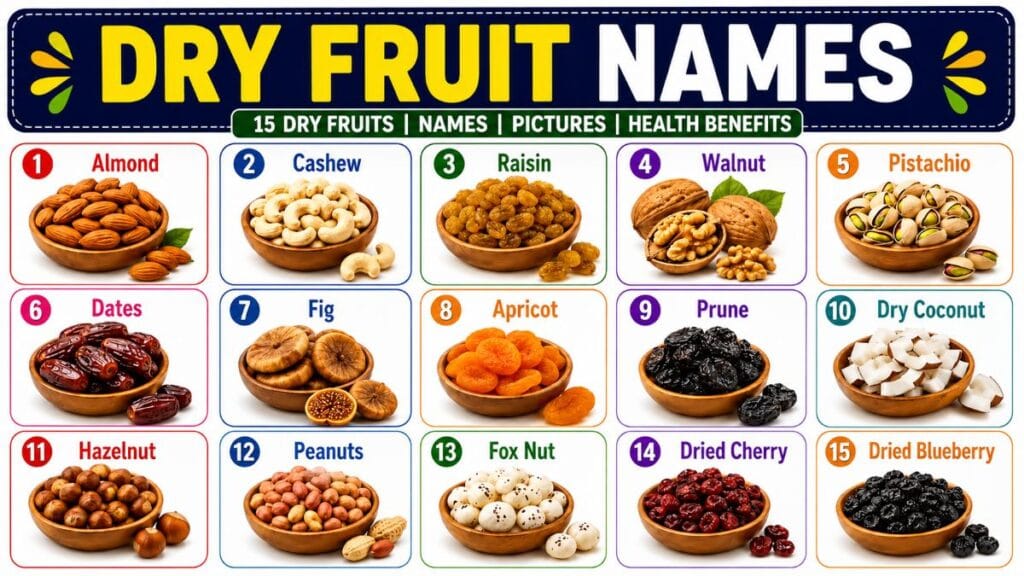
Dry fruit names in English are important vocabulary words that help students improve their language skills while learning about healthy foods. Dry fruits are nutrient-rich foods that provide essential vitamins, minerals, healthy fats, and energy. Learning dry fruit names in English can improve English vocabulary, general knowledge, and awareness of healthy eating habits.
What Are Dry Fruits?
Dry fruits are fruits or nuts that have had most of their water content removed naturally or through drying methods. These foods are rich in nutrients and can be stored for longer periods than fresh fruits. Dry fruits are widely used in snacks, desserts, traditional dishes, and healthy diets around the world.
15 Dry Fruit Names in English
Learning dry fruit names in English is an excellent way for students to improve their vocabulary while gaining knowledge about healthy foods. This infographic presents 15 commonly used dry fruits along with their pictures and key health benefits, making it easy to remember and understand each item.
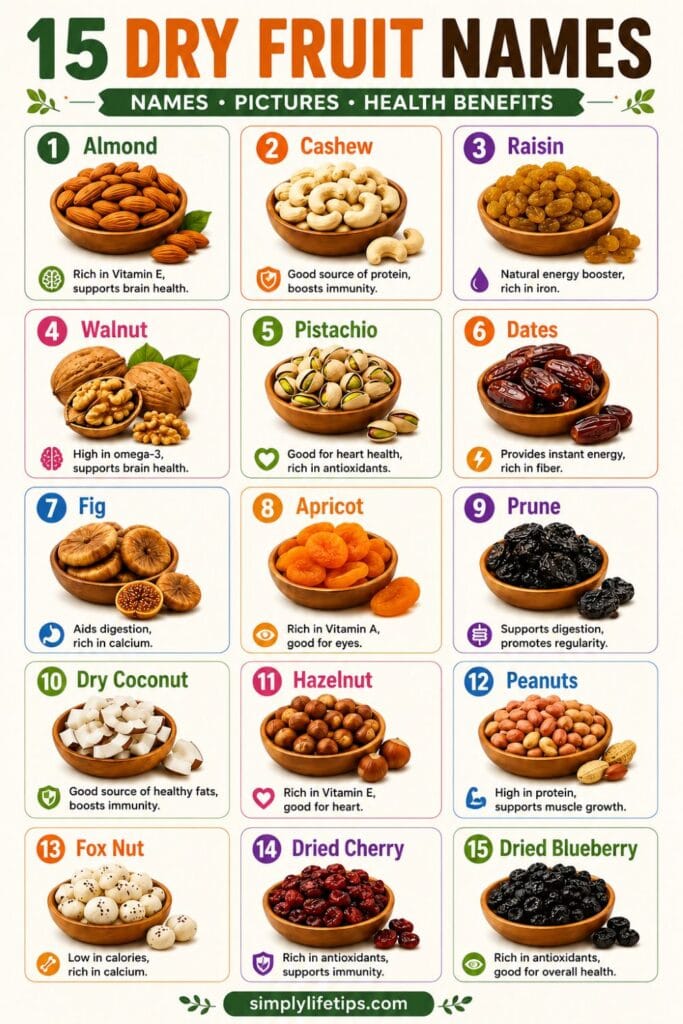
Use this dry fruit names infographic as a quick reference for vocabulary building, classroom activities, general knowledge lessons, and healthy eating awareness. Students can practice spelling, pronunciation, and sentence formation using these commonly used dry fruit names.
1. Almond
Almonds are one of the most popular dry fruits in the world. They are light brown in color and have a crunchy texture. Almonds are rich in vitamin E, protein, fiber, and healthy fats. Many students eat soaked almonds in the morning because they are believed to support memory and concentration. Almonds are commonly added to sweets, milkshakes, cereals, and bakery products.
2. Cashew
Cashews are kidney-shaped nuts with a creamy texture and mild flavor. They are rich in protein, magnesium, copper, and healthy fats. Cashews are often used in curries, desserts, chocolates, and snack mixes. Their smooth texture makes them a favorite ingredient in many dishes. Cashews are used to prepare delicious sweets and desserts.
3. Raisin
Raisins are dried grapes that become sweet after the drying process. They contain natural sugars, iron, fiber, and antioxidants. Raisins are commonly used in cakes, cookies, breads, and traditional dishes. Their sweet taste makes them popular among children.
4. Walnut
Walnuts have a hard outer shell and a brain-shaped kernel inside. They are rich in omega-3 fatty acids, antioxidants, and vitamins. Walnuts are known for supporting brain health and heart health. They can be eaten raw or added to salads, desserts, and baked foods. Walnuts are considered one of the healthiest nuts for the brain.
5. Pistachio
Pistachios are small nuts with green kernels enclosed in beige shells. They are rich in protein, fiber, and antioxidants. Pistachios have a unique flavor and are commonly used in ice creams, sweets, and snacks. Pistachios add flavor and color to many desserts.
6. Dates
Dates are sweet, dried fruits that grow on date palm trees. They are rich in natural sugars, fiber, potassium, and iron. Dates provide quick energy and are often eaten during fasting periods. They are also used in smoothies, desserts, and healthy snacks. Dates are a healthy alternative to refined sugar snacks.
7. Fig
Dried figs are soft, sweet fruits filled with tiny edible seeds. They are rich in fiber, calcium, potassium, and antioxidants. Figs help support digestive health and are often consumed as a healthy snack. Figs are both tasty and nutritious.
8. Apricot
Dried apricots are orange-colored fruits with a sweet and slightly tangy taste. They contain vitamins A and C, potassium, and dietary fiber. Apricots are commonly included in trail mixes and healthy snack packs. Dried apricots are rich in nutrients and taste delicious.
9. Prune
Prunes are dried plums known for their dark color and naturally sweet flavor. They contain fiber, vitamin K, and antioxidants. Prunes are widely recognized for supporting digestive health and maintaining regular bowel movements. Prunes are often recommended for healthy digestion.
10. Dry Coconut
Dry coconut, also known as desiccated or dried coconut, is made by removing moisture from coconut flesh. It contains healthy fats, fiber, and minerals. Dry coconut is commonly used in sweets, curries, and bakery products. Dry coconut is an important ingredient in many traditional recipes.
11. Hazelnut
Hazelnuts are round nuts with a rich and slightly sweet flavor. They contain healthy fats, vitamin E, and antioxidants. Hazelnuts are often used in chocolates, spreads, cookies, and desserts. Hazelnuts are a popular ingredient in chocolate products.
12. Peanuts
Peanuts are affordable and highly nutritious legumes often grouped with dry fruits. They are rich in protein, healthy fats, and essential nutrients. Peanuts are widely used in snacks, peanut butter, candies, and cooking. Peanuts are a healthy source of plant-based protein.
13. Fox Nut
Fox nuts, also known as makhana, are puffed seeds obtained from the lotus plant. They are low in calories and rich in protein, calcium, and antioxidants. Fox nuts are commonly roasted and enjoyed as a healthy snack. Fox nuts are becoming a popular healthy snack among students.
14. Dried Cherry
Dried cherries are sweet and slightly tart fruits packed with antioxidants, vitamins, and minerals. They are often used in breakfast cereals, trail mixes, cakes, and desserts. Dried cherries add a fruity flavor to many recipes.
15. Dried Blueberry
Dried blueberries are nutrient-rich berries that contain antioxidants, vitamins, and fiber. They are commonly added to muffins, cereals, granola bars, and snack mixes. Their sweet taste and health benefits make them increasingly popular. Dried blueberries are a delicious addition to breakfast foods.
Benefits of Learning Dry Fruit Names in English
Learning dry fruit names in English helps students expand their food vocabulary and improve communication skills. It also increases awareness of healthy eating habits and nutrition. Students can use these words in essays, classroom discussions, vocabulary exercises, and general conversations. Understanding food-related vocabulary is useful for both academic learning and daily life.
Dry Fruit Names List for Quick Revision
| No. | Dry Fruit Name |
|---|---|
| 1 | Almond |
| 2 | Cashew |
| 3 | Raisin |
| 4 | Walnut |
| 5 | Pistachio |
| 6 | Dates |
| 7 | Fig |
| 8 | Apricot |
| 9 | Prune |
| 10 | Dry Coconut |
| 11 | Hazelnut |
| 12 | Peanuts |
| 13 | Fox Nut |
| 14 | Dried Cherry |
| 15 | Dried Blueberry |
Conclusion
Dry fruit names in English are valuable vocabulary words that help students improve language skills while learning about nutritious foods. From almonds and walnuts to dried cherries and blueberries, each dry fruit offers unique health benefits and interesting characteristics. Regularly practicing these names can strengthen vocabulary, improve general knowledge, and encourage healthier food choices.
Related Articles
- 7 Health Benefits Of Citrus Fruits That You Didn’t Know
- Types Of Soil For Kids: Discovering The Secrets Beneath Your Feet
- Types Of Plants For Kids’ Learning: Herbs, Shrubs, Trees & More
FAQs about Dry Fruit Names in English
What are dry fruits?
Dry fruits are fruits or nuts that have most of their water content removed naturally or through drying methods.
Which dry fruit is considered best for brain health?
Walnuts and almonds are commonly associated with supporting brain health because of their nutrient content.
Are raisins considered dry fruits?
Yes, raisins are dried grapes and are one of the most popular dry fruits worldwide.
What is Fox Nut called in India?
Fox Nut is commonly known as Makhana in India.
Why should students learn dry fruit names in English?
Learning dry fruit names improves vocabulary, enhances food-related communication skills, and increases nutrition awareness.
If this resonated with you, share it with someone who needs it.
PVM

Mathukutty P V is a Blogger, YouTuber, and Content Writer and the founder of Simply Life Tips. After taking voluntary retirement in 2017, he embraced a free lifestyle focused on learning, personal growth, and sharing practical wisdom to help others live with more purpose and positivity.



