
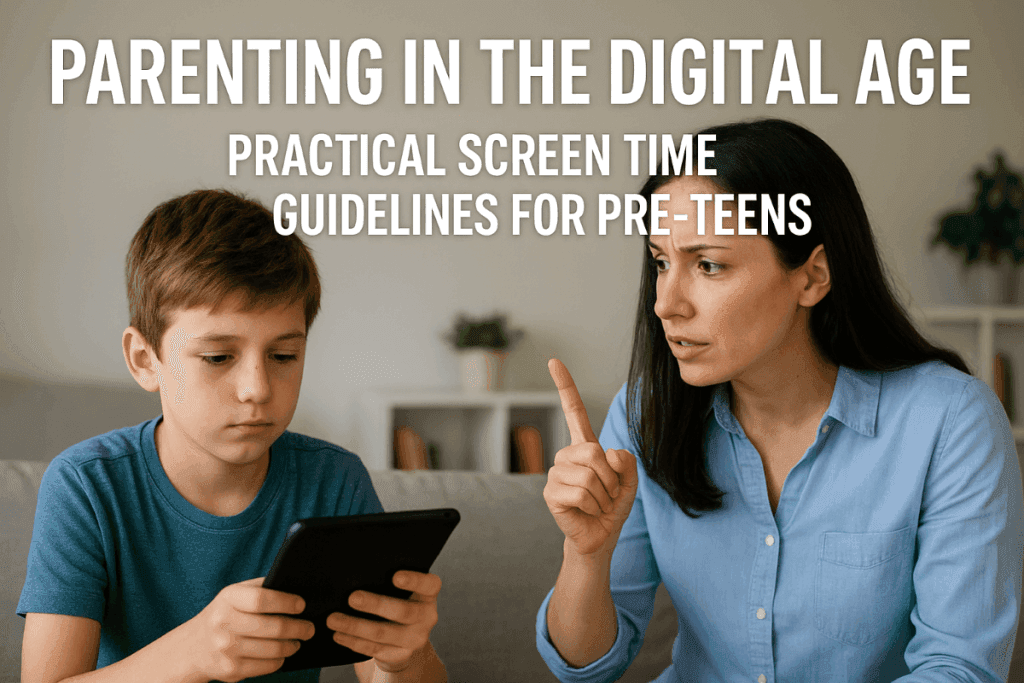
Parenting in the digital age has transformed the way families interact, learn, and grow. Today’s pre-teens are digital natives. They learn coding before cursive. They socialise through screens. They access endless information with a few taps. Technology offers immense benefits. It includes educational videos and creative platforms. Yet, it also introduces challenges like screen addiction, sleep issues, and reduced social interaction. Parents often find themselves asking: “How much screen time is too much?” and “How can I help my child use technology responsibly?” This article provides practical screen time guidelines for pre-teens. These guidelines balance freedom with discipline. They help families thrive in the digital era.
A Short Story: How Anita Helped Her Son Regain Balance
Anita, a working mother, noticed her 11-year-old son Aarav spending hours on his tablet, playing games and watching videos. His grades began to drop, and he stopped playing outdoors. Instead of scolding, Anita decided to talk. Together, they made a family tech plan. One hour of screen time was allowed after homework. Devices were not permitted at dinner. Weekends were reserved for outdoor fun. Within weeks, Aarav became more focused and happier. This story is a reminder. Positive parenting in the digital age is not about control. It emphasises connection, communication, and cooperation.
Parenting in the Digital Age | Screen Time Guidelines

1. Understand the Digital World of Pre-Teens
Before setting rules, parents need to understand how deeply technology is woven into pre-teens’ lives. For this age group, screens are more than entertainment — they are social tools, learning aids, and creative outlets.
Example: A 10-year-old uses YouTube to learn guitar but is also tempted by endless gaming videos.
Tip: Watch how your child uses technology. Instead of banning, discuss the difference between productive and passive screen time. Show interest in their favourite apps — it opens doors for trust-based conversations.
👉 Related Post: Behaviours That Earn Respect – Teach Kids About Values
2. Set Clear and Realistic Screen Time Rules
Establishing boundaries is essential. The American Academy of Paediatrics recommends no more than 1–2 hours of recreational screen time per day for pre-teens. This excludes schoolwork.
Example: Allow screens only after homework, limit video watching to weekends, and avoid screens at least one hour before bedtime.
Tip: Involve your pre-teen in making these rules. For example, ask, “What do you think is a fair amount of time for games?” This collaborative approach ensures commitment and reduces resistance.
3. Model Healthy Digital Behaviour
Children learn more by observing than by listening. If parents are glued to their phones, pre-teens quickly mirror the same habit.
Example: Instead of scrolling during dinner, engage your family in real conversation.
Tip: Introduce a “No Screen Zone” during meals or family gatherings. When children see you obeying it sincerely, they naturally adapt.
👉 Related Post: Family Bonding Activities – Strengthen Relationships
4. Prioritise Quality Over Quantity
Not all screen time is harmful — the type of content matters. Encourage educational, creative, and skill-building apps.
Example: Learning apps like Khan Academy Kids, Duolingo, or Scratch make screen time productive.
Tip: Watch or play alongside your child occasionally. Discuss what they learned or found interesting — this reinforces critical thinking and shared learning.
5. Keep Communication Open and Non-Judgmental
Open conversations are the foundation of safe digital parenting. Children are more likely to hide their online activities if they fear punishment.
Example: If your child receives a strange message, discuss it calmly. Guide them on blocking and reporting instead of reacting with anger.
Tip: Reassure your child, “You won’t be in trouble for telling me what happened online.” Trust encourages openness and honesty.
6. Balance Screen Time with Offline Fun

A healthy digital life includes plenty of offline joy. Encourage outdoor activities, creative hobbies, and family interactions.
Example: Plan “Screen-Free Sundays” filled with cooking, biking, or nature walks.
Tip: Instead of punishing screen use, reward non-screen activities. For example, “If you read for 30 minutes, we’ll play your favourite board game together.”
7. Create Screen-Free Zones and Times
Boundaries are easier to follow when they’re visible. Define certain spaces and times as tech-free.
Example: Keep devices out of bedrooms and dining areas. Charge them in a common spot overnight.
Tip: Make it a family rule, not just a child rule. When everyone follows it, it becomes a household culture rather than a restriction.
8. Teach Digital Responsibility and Online Safety
Digital literacy is a vital life skill. Teach your child to protect their privacy and think critically about what they share.
Example: Explain how photos or comments posted online can stay visible forever.
Tip: Use real stories about cyberbullying or privacy issues to highlight the importance of responsible behaviour. Encourage them to think before they post or click.
9. Use Parental Controls Transparently

Parental controls help monitor activity and filter harmful content, but secrecy breeds mistrust.
Example: Use features like Google Family Link or Apple Screen Time for supervision.
Tip: Let your child know you’ve set filters for safety, not surveillance. This builds understanding and respect for rules.
10. Encourage Digital Creativity
Encourage your pre-teen to create rather than just consume digital content.
Example: Suggest making short videos, coding simple games, or starting a blog about their interests.
Tip: Celebrate their creative outputs — show interest, share with family, and give constructive feedback. It motivates positive engagement with technology.
11. Practice Empathy and Stay Flexible
No two children are alike. What works for one does not work for another. Stay flexible, compassionate, and willing to adapt.
Example: During school projects, screen time can increase — that’s okay if it’s for learning. Balance is key.
Tip: Review your family media plan every few months. Update it as your child grows and new technologies emerge.
Conclusion
Parenting in the digital age isn’t about eliminating screens — it’s about empowering children to use them wisely. With empathy, structure, and open dialogue, you can help your pre-teen grow into a responsible digital citizen. They can enjoy technology. This enjoyment happens without becoming dependent on it. Remember Anita’s story — change begins with understanding and partnership, not punishment. When families lead by example and stay connected offline, technology becomes a tool for growth, not a barrier to happiness.
FAQs – Parenting in the digital age
1. How much screen time should pre-teens have daily?
Experts generally recommend limiting recreational screen time for pre-teens to about one to two hours per day. This guideline helps ensure that screen use does not interfere with sleep, physical activity, or social development. Educational and creative screen activities can be included within a balanced routine, as long as they support learning and healthy habits.
2. How can I get my child off screens without conflict?
Reducing screen time works best when it is done gradually and positively. Instead of enforcing strict bans, introduce engaging alternatives such as outdoor games, board games, puzzles, or cooking together. When screens are replaced with shared activities and quality time, children are more likely to cooperate without feeling punished.
3. Should I allow my pre-teen on social media?
Social media can be introduced slowly and with supervision. Start by discussing online safety, digital etiquette, privacy, and responsible behaviour. Monitoring usage and having open conversations builds trust and helps children develop critical thinking skills before they gain more independence online.
4. What are the warning signs of screen addiction?
Common warning signs include a noticeable loss of interest in offline hobbies, irritability or anger when devices are removed, declining academic performance, and disrupted sleep patterns. If these behaviours persist, it may be necessary to reassess screen habits and create healthier boundaries.
5. How can I make screen time more meaningful?
Encourage activities that promote learning, creativity, and skill development. Educational apps, language learning tools, coding platforms, photography, or design projects help transform screen time into a productive experience. Purposeful use ensures screens add value rather than becoming a passive habit.
Remember, your sharing can make a positive impact! Please share this post across your social media and other networks, allowing others to gain from its content.
PVM

Mathukutty P V is a Blogger, YouTuber, and Content Writer and the founder of Simply Life Tips. After taking voluntary retirement in 2017, he embraced a free lifestyle focused on learning, personal growth, and sharing practical wisdom to help others live with more purpose and positivity.