

Micro habits to boost confidence are the fastest and most sustainable way to build self-belief because they work quietly in the background, reshaping your mindset and behaviour through small, consistent actions. Confidence rarely appears overnight; it is cultivated through repeated choices that train your brain and body to feel capable, grounded, and prepared. When practised daily, these micro habits compound into visible confidence that feels natural rather than forced.
Why Micro Habits Are Powerful for Confidence?
Micro habits reduce resistance because they require minimal effort while delivering maximum psychological impact. Instead of relying on motivation, they leverage consistency, helping your brain associate confidence with familiar actions. Over time, this repetition rewires self-perception, making confidence a default response rather than a conscious effort.
10 Micro Habits to Boost Confidence
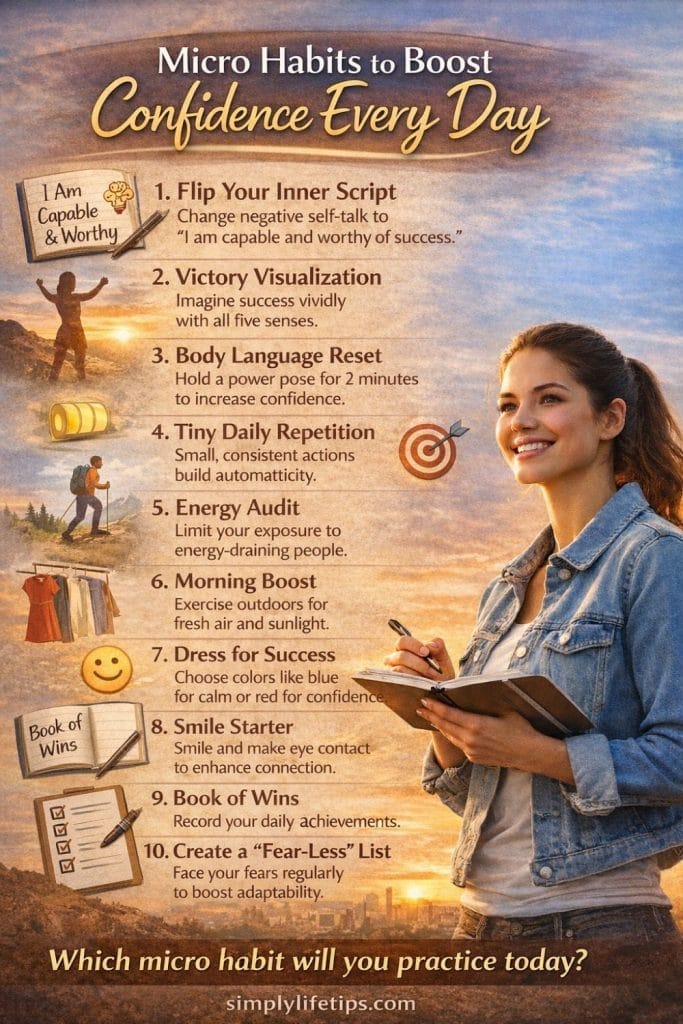
1. Flip Your Inner Script
Your internal dialogue shapes your confidence more than any external feedback, and replacing negative self-talk with empowering language creates an immediate mental shift. For example, when you catch yourself thinking “I’m not good enough,” consciously replace it with “I am capable and worthy of success,” which reframes the situation without denying reality. Writing your affirmation daily reinforces this new script, helping your brain accept it as truth and strengthening emotional resilience during challenging moments.
Flipping your inner script becomes more effective when supported by positive affirmations for success, practised consistently.
2. Victory Visualisation
Visualisation becomes significantly more effective when you engage all five senses, allowing your brain to experience success before it happens. Imagine a future win by seeing the environment clearly, hearing sounds, feeling physical sensations, noticing smells, and even associating emotions with the outcome. This practice conditions your nervous system to feel familiar with success, reducing anxiety and increasing confidence when the real situation arrives.
3. Body Language Reset
Your posture directly influences how confident you feel, not just how confident you look. Research indicates that holding a power pose for two minutes can increase testosterone and reduce cortisol, which enhances confidence while lowering stress. Standing tall with open shoulders before a meeting or conversation sends a signal of authority to your brain, creating a physiological confidence boost within minutes.
4. Tiny Daily Repetition
Confidence grows through repetition rather than intensity, and even a few minutes of daily practice can lead to automaticity. Whether it is practising a presentation line, initiating small conversations, or rehearsing skills, consistent repetition builds muscle memory. Over time, your actions feel natural and effortless, reducing self-doubt and increasing self-trust.
5. Energy Audit
The people and environments you engage with daily either strengthen or weaken your confidence. Conducting an energy audit involves identifying interactions that drain you and consciously setting boundaries to protect your mental space. Limiting exposure to negativity and prioritising supportive relationships creates emotional stability, which is essential for sustained confidence.
6. Morning Energy Boost
Starting your day with outdoor movement amplifies both physical and mental confidence. Exercising in natural light improves mood, regulates circadian rhythms, and increases energy levels through fresh air and sunlight exposure. Even a short morning walk outdoors can elevate motivation and establish a confident tone for the rest of the day.
Outdoor exercise fits naturally into morning routines for mental clarity that improves focus, mood, and emotional balance.
7. Dress for Success
What you wear subtly influences how you feel and behave throughout the day. Choosing colours intentionally, such as blue for calm focus or red for confidence and assertiveness, can create an emotional shift aligned with your goals. Dressing neatly and purposefully reinforces self-respect, which translates into confident behaviour in professional and social settings.
8. Smile Starter
A genuine smile paired with eye contact strengthens human connection and reinforces positive feedback loops. When you smile intentionally at someone while maintaining eye contact, you project warmth and openness, often receiving the same energy in return. This micro habit reduces social anxiety and builds confidence through positive social reinforcement.
9. Book of Wins
Recording daily wins, no matter how small, trains your brain to focus on progress rather than shortcomings. Reflecting on achievements builds momentum and reinforces a growth mindset, helping you recognise your capability over time. This habit is particularly powerful during self-doubt, as it provides tangible evidence of competence.
10. Create a “Fear-Less” List
Facing fears gradually reduces their emotional intensity and increases adaptability. A “Fear-Less” list involves identifying small, manageable actions that challenge discomfort regularly. Each completed action reinforces courage, teaching your brain that fear is survivable and confidence grows through action.
Creating a Fear-Less List is a proven approach for those learning how to overcome fear and self-doubt through gradual exposure.
According to research shared by Harvard Health Publishing, practising positive self-talk and posture awareness can significantly improve confidence and emotional resilience over time, as explained in this article on the mind–body connection: https://www.health.harvard.edu
Studies discussed in Psychology Today highlight how visualisation and small habit formation strengthen self-belief by rewiring neural pathways, making confidence a learned and repeatable skill: https://www.psychologytoday.com
Conclusion
Micro habits to boost confidence work because they align psychology, physiology, and behaviour into a repeatable system of self-belief. What looks natural is usually practised, and confidence is no exception. By integrating these small habits into daily life, you create a stable foundation for authentic confidence that strengthens over time rather than fading under pressure.
What micro habits to boost confidence are you ready to practice daily to build lasting self-belief?
Micro-habits for a Stress-Free Life | The Ultimate Guide to Daily Peace
FAQs about Micro Habits to Boost Confidence
What are micro habits to boost confidence?
Micro habits to boost confidence are small, intentional daily actions that gradually rewire your mindset and behaviour, such as positive self-talk, posture correction, or reflecting on small wins. Because they require minimal effort, they are easier to sustain and more effective over time. These habits compound, creating lasting self-belief without relying on motivation alone.
How long does it take for micro habits to build confidence?
Most people begin noticing subtle internal shifts within two to three weeks of consistent practice. Visible confidence in behaviour and communication typically develops over a few months. The key factor is consistency rather than intensity, as repetition trains the brain to adopt confidence as a default response.
Can micro habits really change low self-confidence?
Yes, micro habits are particularly effective for low self-confidence because they avoid overwhelm and resistance. Small wins send repeated signals of capability to the brain, gradually replacing self-doubt with self-trust. Over time, these changes become automatic and deeply ingrained.
Are micro habits useful for professional confidence at work?
Micro habits are highly effective in professional settings, including practices like power poses before meetings, intentional dressing, and tracking daily achievements. These actions improve presence, clarity, and decision-making. As a result, others also begin to perceive you as more confident and reliable.
What is the most important micro habit for confidence building?
Reframing negative self-talk is often the most impactful micro habit because internal dialogue influences every decision and action. When your inner script shifts from self-criticism to self-support, confidence naturally follows. This habit strengthens emotional resilience and supports all other confidence-building practices.

Mathukutty P V is a Blogger, YouTuber, and Content Writer and the founder of Simply Life Tips. After taking voluntary retirement in 2017, he embraced a free lifestyle focused on learning, personal growth, and sharing practical wisdom to help others live with more purpose and positivity.