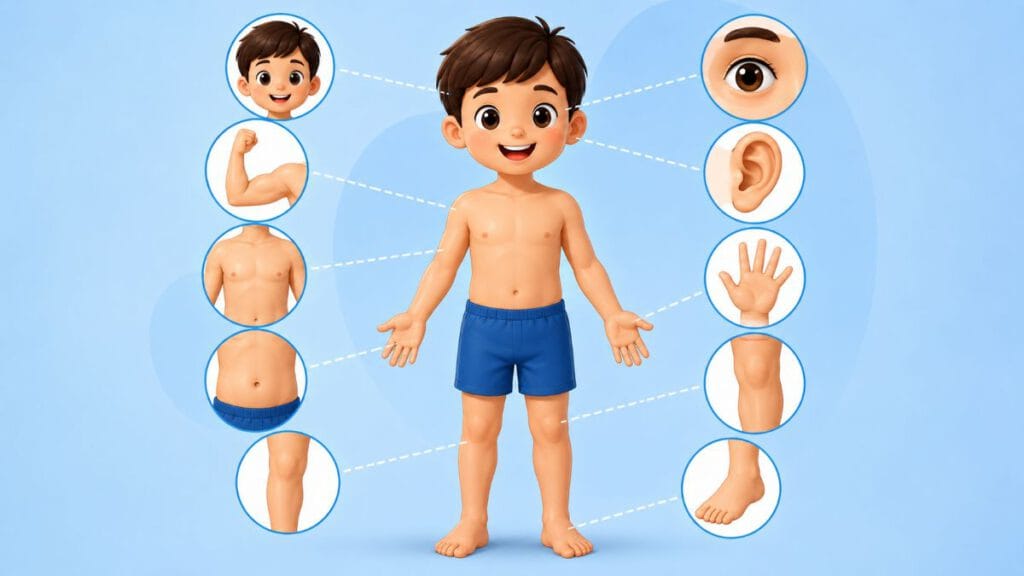
Human body parts for kids are easier to learn with a simple chart, clear names, and visual examples. This guide introduces children to common parts of the human body in a fun and easy-to-understand way. The labeled chart helps kids recognize and remember body parts while building basic knowledge about the human body.
Human Body Parts Names for Kids
Learning human body parts names is an important first step in understanding the human body. Children can use this simple chart to identify common body parts such as the eyes, ears, nose, mouth, hands, fingers, knees, feet, and toes. The labeled chart makes learning easier and helps kids recognize and remember each body part.
For more child-friendly information about how the human body works, explore the How the Body Works resources from Nemours KidsHealth.
Human Body Parts and Their Functions
| Body Part | What It Helps Us Do |
|---|---|
| Eyes | See the world around us |
| Ears | Hear sounds |
| Nose | Smell and breathe |
| Mouth | Eat, speak, and taste |
| Hands | Hold, touch, and pick up things |
| Fingers | Hold and move small objects |
| Legs | Walk, run, and jump |
| Feet | Stand, walk, and balance |
| Knees | Help us bend our legs |
| Toes | Help us balance and walk |
Fun Ways to Learn Human Body Parts
Learning body parts can be more enjoyable when children use simple games and activities. Parents and teachers can point to a body part and ask children to name it, use the chart for matching activities, or ask kids to identify body parts on themselves. Repeating these activities helps children remember the names more easily.
Simple Body Parts Activities
- Point and name: Ask the child to point to their eyes, ears, nose, mouth, hands, or feet and say the name.
- Match the names: Write body-part names on small cards and match them with pictures.
- Use the chart: Point to a body part on the chart and ask the child to identify it.
- Sing and move: Use a body-parts song and encourage children to touch each body part as it is mentioned.
- Quick quiz: Ask simple questions such as “What do we use to see?” or “Which body part helps us hear?”
Human Body Parts Chart for Kids
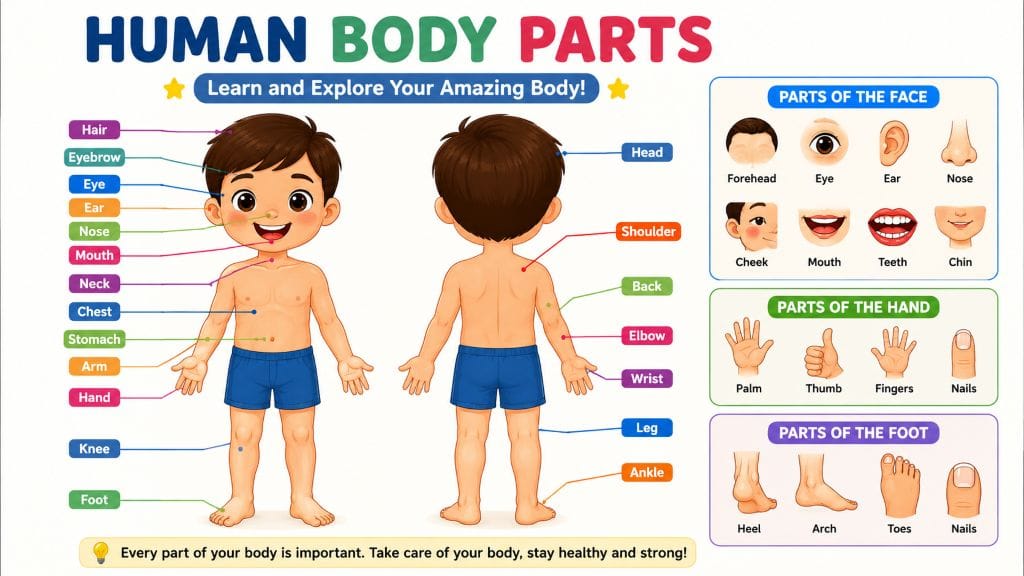
This human body parts chart helps children visually recognise important external body parts such as the head, hands, chest, abdomen, legs, and feet. Visual learning makes it easier for kids and toddlers to remember body part names quickly.
Human Body Parts for Kids Video
This video helps children understand human body parts through simple visuals and explanations. Watching and listening improve memory and learning speed.
Human Body Parts Table
| Forehead | Eyebrow | Eye | Ear | Cheek |
| Hair | Temple | Nose | Teeth | Tongue |
| Mouth | Jaw | Neck | Shoulder | Armpit |
| Hand | Thumb | Index finger | Middle finger | Ring finger |
| Little Finger | Elbow | Chest | Abdomen | Waist |
| Hip | Thigh | Knee | Foot | Toes |
The human body parts table provides a clear list of different body parts. This structured format helps children practice reading and memorising body part names step by step.
External Human Body Parts for Kids
External human body parts are the parts we can see and touch.
- Head – The top part of the body that contains the brain.
- Eyes – Help us see.
- Ears – Help us hear.
- Nose – Helps us breathe and smell.
- Mouth – Helps us eat and speak.
- Teeth – Help us chew food.
- Tongue – Helps us taste and talk.
To understand how these sense organs work together, read our detailed guide on human sense organs and the five senses for kids.
After air enters through the nose, it travels to the lungs, where it helps your body breathe. To understand this process better, read our detailed guide on how the lungs work and the breathing process for kids.
- Neck – Connects the head to the body.
- Shoulders – Help move the arms.
- Arms – Help us lift and carry things.
- Hands – Help us write, hold objects, and play.
- Fingers – Help us grip small items.
- Chest – Protects important organs like the heart and lungs.
- Abdomen – The stomach area of the body.
- Hip – Connects the upper body to the legs.
- Thigh – The upper part of the leg.
- Knee – Helps bend the leg.
- Leg – Supports body weight.
- Foot – Helps us walk and balance.
- Toes – Help maintain balance.
Internal Human Body Parts for Kids
Internal body parts are inside our body and cannot be seen from the outside.
- Brain – Helps us think and control our bodies.
- Heart – Pumps blood throughout the body.
- Lungs – Help us breathe air.
- Stomach – Helps digest food.
These internal organs are very important for staying healthy.
Why Should Kids Learn the Parts of the Human Body?
Learning human body parts helps children:
• Improve vocabulary and communication
• Develop body awareness
• Understand basic science concepts
• Identify pain or injury clearly
• Build confidence in classroom learning
Conclusion
Learning Human Body Parts becomes simple and enjoyable when children use charts, pictures, and interactive activities. By understanding both external and internal body parts, kids build strong vocabulary, improve body awareness, and develop early science knowledge. With the help of visual charts and engaging videos, children can easily recognise different body parts and remember their functions in daily life. Encourage regular practice using the chart and activities to make learning natural and fun.
Children can also learn about specific parts of the human head, such as the eyes, ears, nose, and mouth, in our detailed guide on parts of the human head for kids.
FAQs
What are human body parts for kids?
Human body parts include external parts like the head, hands, legs, and feet, as well as internal organs like the heart and brain.
What are the main external body parts?
The main external body parts include the head, arms, hands, chest, abdomen, legs, and feet.
Why is it important to teach kids body parts?
It helps children understand their body, communicate better, and develop early science knowledge.
What are internal body parts?
Internal body parts are organs inside the body, such as the heart, lungs, brain, and stomach.
What is the easiest way to teach human body parts?
Using charts, pictures, games, and simple activities makes learning easy and enjoyable.

Mathukutty P V is a Blogger, YouTuber, and Content Writer and the founder of Simply Life Tips. After taking voluntary retirement in 2017, he embraced a free lifestyle focused on learning, personal growth, and sharing practical wisdom to help others live with more purpose and positivity.