Online safety for children has become a serious topic. It is unavoidable because the internet is now deeply woven into children’s education. It is also part of their entertainment and social life. Children now attend online classes and finish their homework through digital platforms. They also play games, watch videos, and communicate with friends. This digital environment did not exist for earlier generations. Parents often feel caught between restricting children too much. They also fear exposing them to online dangers. A clear understanding of online safety for children helps parents move beyond fear and make confident decisions. It encourages confident, balanced guidance that protects children. It also allows healthy growth.
What Is Online Safety for Children?
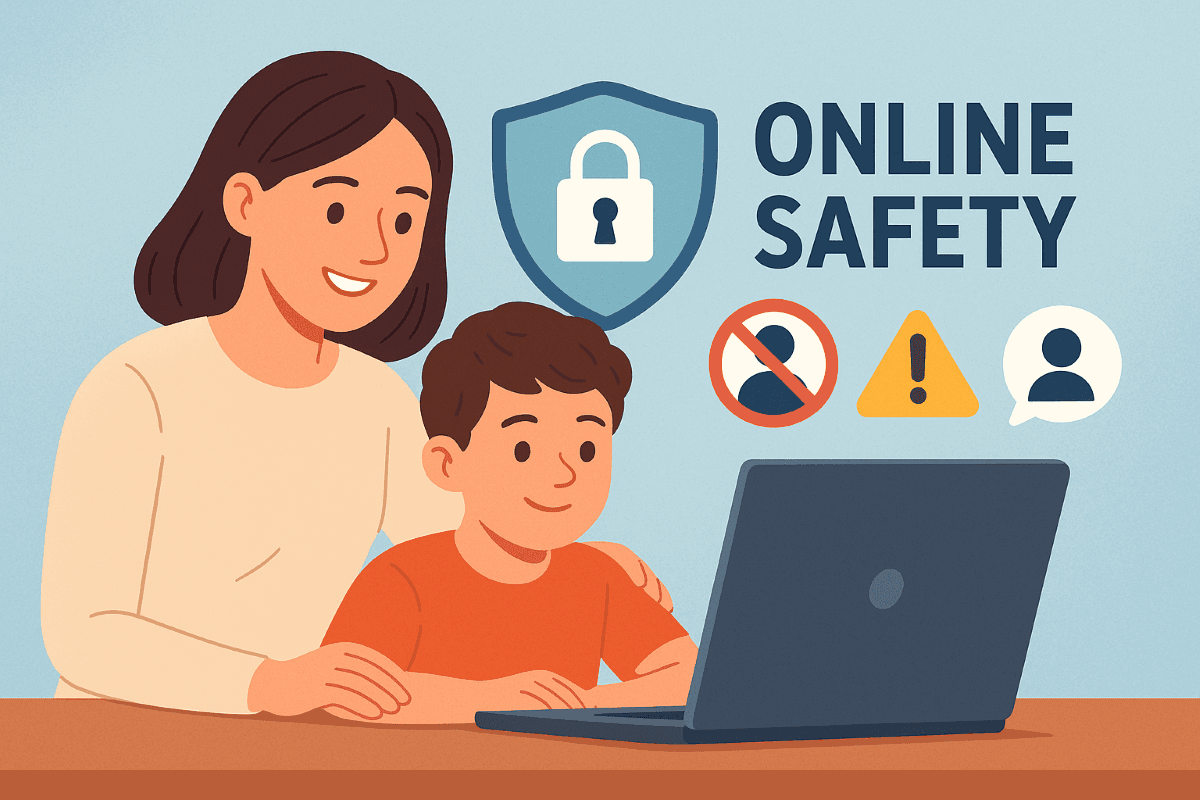
Online safety for children means creating a secure and healthy digital environment. In this space, children can learn, explore, and communicate without being harmed physically, emotionally, or mentally. It includes protecting children from harmful content, cyberbullying, online predators, scams, privacy violations, and unhealthy screen habits. Online safety is not just about blocking websites or limiting screen time. It involves teaching children how to behave responsibly online.
For example, a child knows not to share personal details. The child understands how to report uncomfortable messages. They also balance screen time with offline activities. This child is practising online safety. It is a shared responsibility between parents, schools, and children themselves.
Why Online Safety for Children Is Important?
The importance of online safety for children grows every year as digital exposure increases. Children’s minds are still developing, and they do not fully understand risks or long-term consequences. Without guidance, children trust strangers, believe false information, or become emotionally affected by online comparison and criticism. Online safety protects children’s mental health by reducing stress, fear, and pressure caused by social media and online interactions. It also protects their privacy and identity, which can be misused if personal data is shared carelessly. For instance, a child posting school details or photos publicly unknowingly exposes themselves to risks. Online safety helps children develop essential digital skills while protecting their emotional well-being and building lasting confidence.
Benefits of the Online World When Safety Is Ensured
When online safety for children is managed well, the internet becomes a powerful tool for growth. Educational benefits are one of the biggest advantages. Children can access learning videos, interactive lessons, online libraries, and creative tools that make education engaging. A child struggling with reading can improve faster through visual storytelling apps. Socially, safe online platforms help children stay connected with friends and family, especially during times when physical interaction is limited. Creativity also flourishes online through drawing apps, music tools, coding platforms, and writing communities. Technological exposure prepares children for future careers by building digital confidence early. These benefits are only meaningful when safety rules and guidance are in place.
Problems and Risks Children Face Online
Online safety for children is essential. Even with its many advantages, the digital world exposes them to several serious risks. One major problem is excessive screen time, which can lead to poor sleep, reduced physical activity, and difficulty concentrating. Emotional risks include low self-esteem caused by social media comparison and the pressure to seek likes and approval.
Cyberbullying is another serious issue, where children face teasing, threats, or humiliation online. Children also accidentally come across violent or adult content that they are not emotionally ready to process. Online scams, fake games, and misleading advertisements can trick children into sharing information or spending money. Gaming addiction is another growing concern, where children lose interest in studies and family time. These issues make it clear that guiding children wisely is far more effective. It is better than either turning a blind eye or completely restricting internet use.
How Fear and Media Influence Parenting Decisions?
Media reports often highlight extreme cases of online harm involving children, which increases parental anxiety. While awareness is necessary, fear-based reporting can make the internet only dangerous. This fear sometimes leads parents to impose sudden bans or strict restrictions. Children who are already used to online learning and entertainment resist these rules, leading to arguments and secrecy. When children hide their online activity, risks actually increase. Online safety for children improves when parents act with understanding instead of fear. They should focus on education and realistic boundaries rather than panic-driven decisions.
How To Overcome Video Game Addiction?
The Problem With Extreme Parenting Approaches
Parents often follow one of two extreme paths: enforcing strict control or allowing total freedom. Strict control can lower certain risks. Nevertheless, it also isolates children socially. It can slow the development of digital skills. This can leave them feeling excluded when friends talk about online experiences they are not permitted to have. Entire freedom, yet, gives children the responsibility of self-control too soon. They face risks they can’t manage on their own. Online safety for children is most effective when parents choose a balanced approach. They should offer guidance and supervision. Parents should increase independence as children grow in maturity and responsibility.
Practical Ways to Ensure Online Safety for Children
The first solution is parental awareness. Parents should understand the platforms, apps, and games their children use. Knowing privacy settings, age limits, and reporting tools helps parents guide effectively. Setting clear rules is another important step. Rules include fixed screen time, device-free meals, and limits on social media based on their age.
For example, allowing online entertainment only after homework teaches discipline without punishment. Teaching children digital responsibility is equally important. Children should learn not to share personal details, passwords, or photos with strangers. Open communication plays a key role in online safety for children. Parents should encourage children to discuss their online experiences without fear of punishment. If a child receives a disturbing message, knowing they can share it safely prevents bigger problems.
Smartphone Addiction In Children: Causes Effects And Tips
Role of Trust and Emotional Support
Trust strengthens online safety for children. A supportive relationship makes children report problems like cyberbullying or inappropriate content. Parents should listen calmly and guide instead of reacting with anger.
For example, when a child spends too much time gaming, discussing the importance of balance is essential. Setting limits together is far more effective than shouting or taking devices away. Emotional support in such moments helps children build confidence and resilience, allowing them to handle online negativity with greater strength.
The Role of Schools and Society
Online safety for children is not only a family responsibility. Schools play an important role by teaching digital literacy, respectful online behaviour, and cyber awareness. Society and media should also offer balanced information that educates without creating panic. When parents, teachers, and communities work together, children get consistent messages about safe and responsible internet use.
Long-Term Impact of Teaching Online Safety Early
Teaching online safety for children at a young age creates lifelong digital habits. Children who learn balance, respect, and responsibility online grow into adults who use technology wisely. They become better equipped to face online challenges, safeguard their privacy, and use digital tools in positive and productive ways. Early guidance reduces future risks and helps children grow with confidence rather than fear.
Online Safety with UNICEF Youth Advocate Gitanjali Rao
Risks of the Internet for young people
Conclusion
Online safety for children is not about banning technology or allowing unlimited freedom. It is about understanding what the digital world offers, recognising real risks, and applying thoughtful solutions. With awareness, balanced rules, and trust, parents can actively turn the online world into a safe space. They can make it an enriching environment for children. The internet will continue to grow. Its influence on young minds will also increase. With responsible guidance, children can enjoy its benefits while staying protected.
Are we ready to guide our children with confidence instead of fear?
FAQs – Online Safety for Children
1. What does online safety for children mean?
Online safety for children involves protecting kids from potential online risks while helping them develop healthy digital habits. This includes safeguarding personal information. It also involves preventing access to inappropriate content. Another aspect is avoiding cyberbullying. Finally, it’s about learning how to interact responsibly on digital platforms. For instance, a child knows not to share their home location online. They also understand not to share their phone number. Additionally, they avoid sharing passwords. This is practicing online safety. Online safety also means guiding children to balance screen time with offline activities for their overall well-being.
2. Why is online safety important for children?
Online safety is crucial because children’s minds are still developing. They do not always understand the consequences of their online actions. Without proper guidance, children can fall victim to scams, cyberbullying, or exposure to harmful content. Safe internet practices protect mental and emotional health. They encourage responsible behavior. These practices also help children use digital tools for learning and creativity. For instance, children guided in online research can learn valuable skills while avoiding unreliable or unsafe websites.
3. What are the main online risks children face?
Children face several risks online, including:
- Cyberbullying: Harassment or teasing through social media, messaging apps, or games.
- Inappropriate content: Exposure to violent, adult, or harmful material.
- Online scams and phishing: Fraudulent attempts to steal personal information or money.
- Excessive screen time: Leading to reduced physical activity, poor sleep, or social withdrawal.
- Gaming addiction: Spending excessive hours on games, affecting studies and family life.
A child can click on a suspicious link. They unknowingly download malware. They also share personal information. This emphasizes the need for guidance.
4. How can parents guarantee online safety without being too strict?
Parents can guarantee online safety by setting clear rules, educating themselves about digital platforms, and maintaining open communication. Instead of banning devices entirely, parents can:
- Set specific times for study, entertainment, and social interaction online.
- Use parental control apps and privacy settings.
- Encourage children to report uncomfortable or suspicious messages.
- Engage in their child’s online activities occasionally to understand what they are engaging with.
This approach fosters trust and responsibility rather than creating secrecy or conflict.
5. Can children gain from the internet if safety measures are followed?
Absolutely. When online safety measures are in place, children can gain significant educational, social, and creative benefits. They can access online learning resources. They can also develop digital literacy and improve communication skills. Moreover, they can explore hobbies or creative tools like coding platforms, drawing apps, or music tutorials. For example, a child using an interactive app to learn a new language gains practical skills. They stay safe under parental supervision. Safe internet use helps children grow into digitally responsible and confident individuals.
Thank you for taking the time to explore this post. I sincerely hope you found the insights valuable and actionable. If this content resonated with you, please consider sharing it. Your support helps me spread knowledge and inspiration to others in our community.
PVM

Mathukutty P. V. is the founder of Simply Life Tips, a blogger, content writer, influencer, and YouTuber passionate about learning and sharing. Guided by “Simple Living, Creative Thinking,” he believes in the power of knowledge sharing and lifelong learning.
Discover more from Simply Life Tips
Subscribe to get the latest posts sent to your email.