

Guidelines for clear communication form the foundation of healthy relationships. They create productive workplaces and meaningful human connections. Every conversation we engage in shapes how others perceive our intent, confidence, and character. Communication is not only about speaking words; it is about transferring understanding. Many conflicts, misunderstandings, and emotional distances arise not from bad intentions but from unclear expression, poor listening, or misread signals. When communication lacks clarity, even simple messages can become sources of confusion or tension. By using practical guidelines for clear communication, individuals can express themselves honestly. They can listen attentively. These practices encourage dialogue that fosters collaboration rather than disagreement.
What Are the Guidelines for Clear Communication?
Guidelines for clear communication are simple yet powerful. They help individuals convey messages accurately. They also aid in understanding others without unnecessary confusion. These guidelines emphasise clear thinking, thoughtful word choice, appropriate tone, effective body language, attentive listening, and emotional awareness.
Body Language Tricks To Impress Anyone – Improve Communication Skills
For example, say “I feel unheard when my point is interrupted,” instead of “You never listen.” The new approach expresses the same concern without triggering defensiveness. These guidelines are not limited to formal settings. They apply equally to family conversations. They also apply to friendships, leadership roles, customer interactions, and everyday discussions. When followed consistently, they reduce misunderstandings and improve trust.
Why Clear Communication Is Essential in Daily Life?
Clear communication is essential because human interaction depends on shared understanding. In personal relationships, unclear communication can lead to emotional distance, resentment, or repeated arguments.
For instance, when expectations are assumed instead of expressed, disappointment often follows. In professional life, unclear instructions can result in errors, wasted time, and frustration among team members. A manager who vaguely says “Finish this soon” will create stress and confusion. Conversely, a manager who states “Please finish this by Friday noon” sets realistic expectations. Clear communication saves time, protects relationships, and creates emotional safety, making it one of the most valuable life skills.
Practical Guidelines for Clear Communication
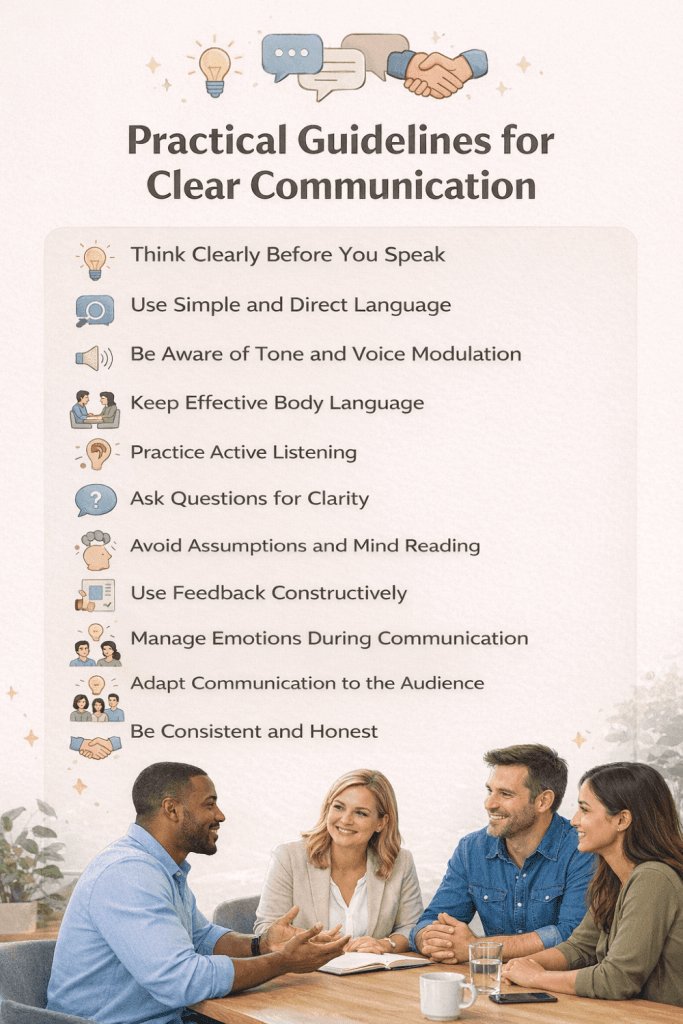
Think Clearly Before You Speak
Lines for clear communication are mental clarity before verbal expression. Many people speak while their thoughts are still unorganised, leading to rambling or contradictory messages. Taking a brief pause to organise thoughts improves both confidence and clarity.
For example, during a difficult conversation, silently recognise the main point you want to convey. This helps you stay focused instead of reacting emotionally. This habit also prevents saying things you later regret. Clear communication begins internally, because confused thoughts almost always produce confused speech.
Use Simple and Direct Language
Using simple and direct language is a key guideline for clear communication. Complexity often hides meaning rather than enhancing it. Many people mistakenly believe that using complex words makes them sound intelligent. In reality, clarity is a sign of mastery.
For example, saying “We need to improve coordination” is clearer than saying “We must optimise our interdepartmental synergies.” Simple language ensures that the listener understands the message without needing interpretation. This is especially important when communicating with diverse audiences, children, or people from different cultural or educational backgrounds.
Be Aware of Tone and Voice Modulation
Tone plays a major role in how a message is received, sometimes even more than the words themselves. The same sentence can sound supportive or insulting depending on tone.
For instance, saying “That’s fine” in a calm tone communicates acceptance, while saying it sharply can signal irritation. Clear communication requires aligning tone with intention. Speaking too loudly can be aggressive, while speaking too softly signals a lack of confidence. A steady, calm, and respectful tone encourages openness and trust in conversations, especially during disagreements.
Keep Effective Body Language
Body language is a silent but powerful part of communication. Eye contact, facial expressions, posture, and hand gestures all convey messages. Maintaining eye contact while speaking shows confidence. It also demonstrates sincerity. Avoiding eye contact is often seen as a sign of insecurity. It signals a lack of interest.
Simple gestures like nodding while listening signal attentiveness and encourage the speaker to express themselves more freely. In contrast, tightly crossed arms during a conversation are defensive, even if that is not the intent. Guidelines for clear communication highlight the importance of aligning body language with spoken words to prevent mixed or confusing signals.
Practice Active Listening
Clear communication is incomplete without active listening. Many people listen only to respond, not to understand. Active listening involves giving full attention, avoiding interruptions, and acknowledging the message.
For example, you can summarise what the other person said. Saying “So you’re feeling overwhelmed because of deadlines” confirms understanding. It also shows empathy. This practice reduces misunderstandings and makes the speaker feel valued. Active listening transforms conversations from debates into meaningful exchanges.
22 Active Listening Phrases To Transform Your Communication Skills
Ask Questions for Clarity
Asking questions is not a sign of weakness but a sign of engagement and clarity. When something is unclear, asking thoughtful questions prevents assumptions.
For instance, instead of guessing expectations at work, asking “Can you clarify the priority for this task?” ensures alignment. Open-ended questions like “What do you mean by that?” or “Can you explain further?” invite deeper understanding. Guidelines for clear communication encourage curiosity, because clarity grows through dialogue, not silence.
Avoid Assumptions and Mind Reading
Assumptions are one of the biggest barriers to clear communication. Assuming intentions, emotions, or meanings often leads to incorrect conclusions.
For example, assuming silence means disapproval creates unnecessary anxiety, while the other person is simply busy. Clear communication replaces assumptions with verification. Saying “I noticed you were quiet in the meeting. Is everything okay?” opens space for honest conversation and prevents misunderstanding.
The Art Of Conversation: A Guide To Better Communication
Use Feedback Constructively
Feedback plays a vital role in communication, particularly in personal and professional growth. Clear communication guidelines recommend addressing actions rather than attacking personality.
For example, rather than saying, “You are careless,” try saying, “The report includes a few errors.” Suggest, “Let’s review them together.” This keeps the conversation constructive and focused on improvement. Offering balanced feedback that combines appreciation with areas for growth encourages motivation rather than defensiveness. When feedback is specific, respectful, and solution-focused, it builds trust and improves overall performance.
Manage Emotions During Communication
Emotional awareness plays a critical role in clear communication. Strong emotions like anger, fear, or frustration can distort messages. Pausing before responding helps regulate emotions and prevents reactive speech.
For instance, during conflict, choosing to say “I need a moment to think before responding” avoids escalation. Guidelines for clear communication emphasise responding thoughtfully rather than reacting impulsively, especially in emotionally charged situations.
Adapt Communication to the Audience
Clear communication considers the listener’s perspective. The way you speak to a colleague differs from how you talk to a child or a senior leader.
For example, technical jargon works well among experts but often confuses a wider audience. Tailoring your language, examples, and tone to match the listener ensures your message is clearly understood. This thoughtful approach, guided by empathy and awareness, makes communication more inclusive and impactful.
How To Speak Well: Tips For Effective Communication
Be Consistent and Honest
Consistency builds credibility. When words align with actions, communication becomes trustworthy.
For example, a leader who communicates the values of teamwork but acts selfishly sends conflicting messages. Honesty, even when conversations are difficult, strengthens long-term relationships. Clear communication does not mean avoiding discomfort; it means expressing truth respectfully and transparently.
Benefits of Adhering to Guidelines for Clear Communication
Adhering to guidelines for clear communication offers many benefits. It strengthens relationships by reducing misunderstandings and conflicts. It improves confidence because individuals feel heard and understood.
In professional settings, it enhances teamwork, productivity, and leadership effectiveness. Clear communication also supports emotional well-being by reducing stress caused by unresolved confusion or misinterpretation. Over time, it builds a reputation of reliability, empathy, and maturity.
Common Barriers to Clear Communication
Even with good intentions, communication can be affected by several common barriers. Distractions like mobile phones, emotional pressure, cultural differences, fixed judgments, and fear of confrontation often interfere with understanding.
For instance, multitasking during a conversation divides attention and increases the chance of mistakes. Identifying these obstacles is the first step toward addressing them. With awareness, consistent effort, and practice, their negative impact can be greatly reduced.
Practical Tips to Improve Clear Communication Daily
Daily habits can significantly improve communication skills. Practising mindful pauses before speaking, summarising key points, observing reactions, and reflecting on conversations help refine clarity.
For instance, reviewing a conversation mentally and asking “Was my message understood?” encourages growth. Reading, writing, and self-reflection also enhance vocabulary and thought organisation, supporting clearer expression over time.
Conclusion
Guidelines for clear communication are not rigid rules but mindful habits that shape the way we relate to others. When people organise their thoughts and use simple language, communication turns into a bridge. Listening with attention and responding with empathy makes it less of an obstacle. In a world full of distractions and constant noise, clear communication stands out as a vital life skill. It strengthens trust, minimises conflict, and fosters genuine understanding. When practised consistently, these guidelines turn everyday conversations into opportunities for growth. They create deeper connections and mutual respect. This practice supports confidence and clarity in both personal and professional life.
FAQs – Guidelines for Clear Communication
What are the most important guidelines for clear communication
The most important guidelines include clarity of thought, simple language, active listening, appropriate tone, and awareness of body language. These elements together guarantee understanding. They reduce misinterpretation.
How can clear communication improve relationships?
Clear communication minimises assumptions by replacing guesswork with clarity. It promotes honesty by encouraging open and transparent expression. When people can share emotions respectfully, trust grows naturally and deeper emotional connections develop over time.
Why is listening important in clear communication?
Listening promotes true understanding, acknowledges the speaker’s feelings, and helps prevent misinterpretations. It makes the other person feel valued and respected rather than ignored or judged. As a result, conversations become more balanced, meaningful, and productive.
Can clear communication be learned or improved?
Yes, clear communication is a skill that develops over time through regular practice and self-awareness. Seeking and accepting feedback helps find areas for improvement and refine how messages are delivered. With conscious effort in everyday interactions, communication becomes more confident, clear, and effective.
How does clear communication help in the workplace?
It strengthens teamwork by ensuring everyone is aligned and working toward shared goals. Clear communication reduces errors by removing confusion and minimising misunderstandings in tasks and instructions. It also improves efficiency and enhances leadership credibility by making expectations, feedback, and responsibilities easy to understand and act upon.
Thank you for taking the time to explore this post. I sincerely hope you found the insights valuable and actionable. If this content resonated with you, please consider sharing it. Your support enables me to share knowledge and inspiration with others in our community.
PVM

Mathukutty P. V. is the founder of Simply Life Tips, a blogger, content writer, influencer, and YouTuber passionate about learning and sharing. Guided by “Simple Living, Creative Thinking,” he believes in the power of knowledge sharing and lifelong learning.
Discover more from Simply Life Tips
Subscribe to get the latest posts sent to your email.