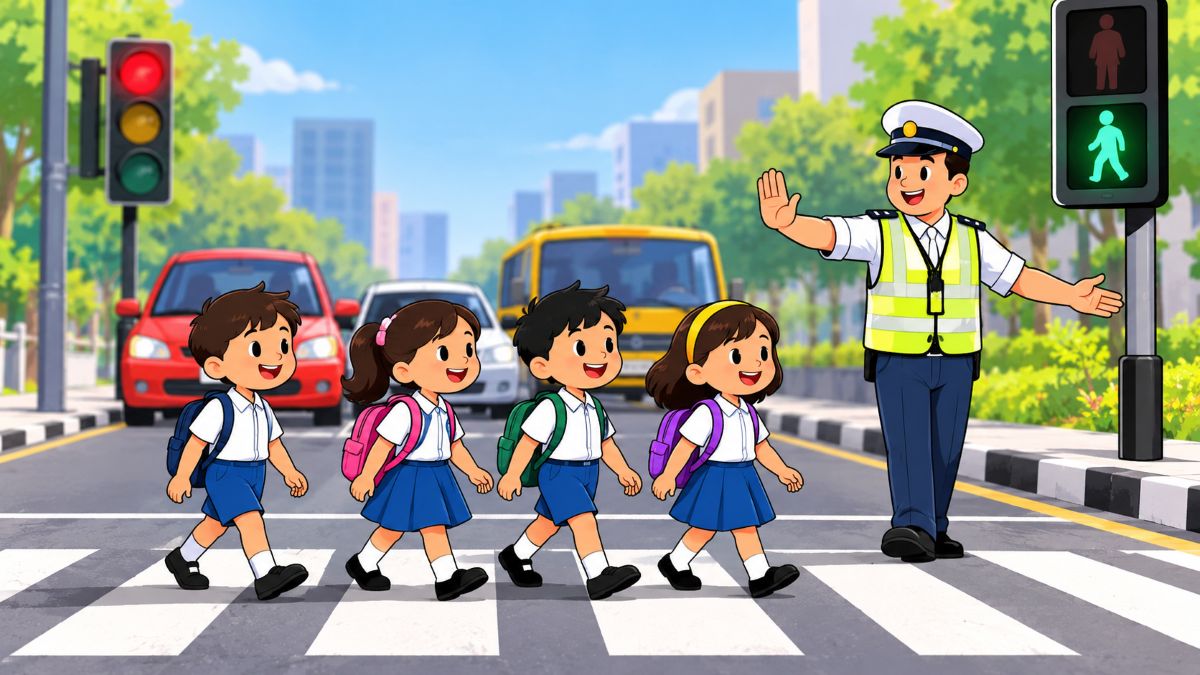
Road safety and traffic rules for kids are essential lessons that help children stay safe near roads, understand traffic signals, and learn how to cross streets correctly. Teaching these simple rules early helps children build safe habits that can protect them throughout their lives.
Hello, kids! Do you know what the different traffic light colours mean? Do you know how to cross a road safely? Let’s learn about road signs, traffic signals, and important road safety rules with the help of an animated educational video.
Road Safety And Traffic Rules for Kids: Infographic
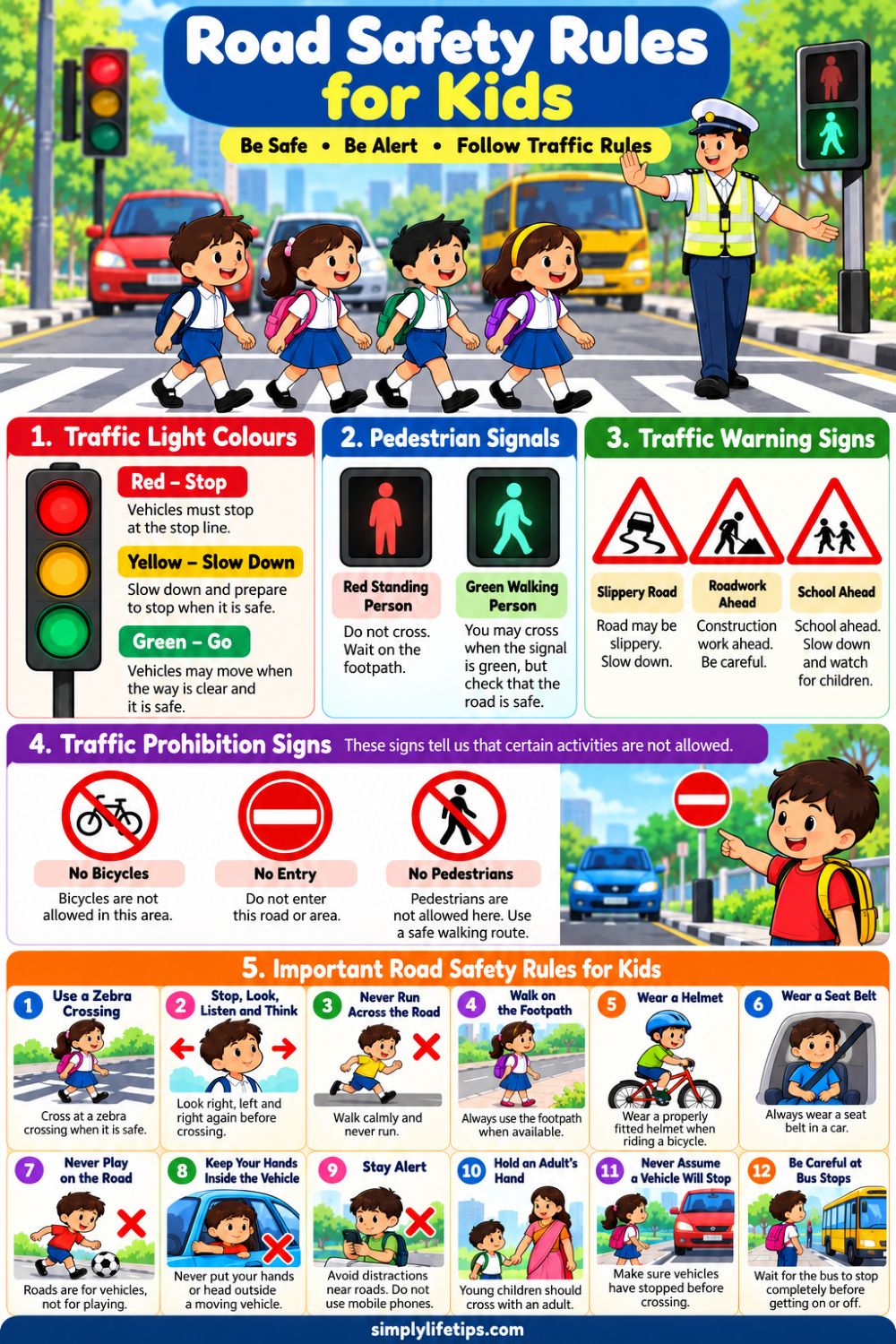
Learning road safety rules is easier with pictures. This infographic explains traffic light colours, pedestrian signals, road signs, and 12 important road safety rules every child should know. Parents and teachers can use it to help children develop safe habits near roads.
Remember, kids, always stop, look, and listen before crossing the road. Use zebra crossings, follow traffic signals, and never play near moving vehicles. Young children should always cross roads with a trusted adult. Practise these road safety rules every day to help keep yourself and others safe.
Road Safety and Traffic Rules for Kids
Roads are used by cars, buses, motorcycles, bicycles, and pedestrians. Everyone must follow traffic rules to prevent accidents and keep roads safe. Let’s explore some important road safety rules every child should know.
What Do the Colours of Traffic Lights Mean?
Traffic lights help control the movement of vehicles and pedestrians. Each colour has a special meaning.
- Red light – Stop: Vehicles must stop at the stop line when the signal turns red.
- Yellow light – Prepare to stop: Drivers should slow down and prepare to stop when it is safe to do so. They should not speed up to beat the signal.
- Green light – Go when safe: Vehicles may move when the light turns green, provided the way is clear and it is safe to proceed.
Remember, a green light does not mean you should ignore other vehicles or pedestrians. Always follow traffic signals and road signs.
Understanding Pedestrian Traffic Signals
Pedestrian signals help people know when to cross the road.
- Red standing person: Do not cross. Wait safely on the footpath.
- Green walking person: You may cross when the signal permits it, but first check that traffic has stopped and the road is safe.
Children should always cross with an adult when possible. Never run across the road, even when the walking signal is green.
Understanding Traffic Warning Signs
Traffic warning signs alert drivers and pedestrians to possible dangers ahead. Many warning signs are triangular, with a red border and a white background, although designs can vary by country.
Here are some common warning signs children should recognise.
1. Slippery Road Sign
This sign warns that the road may be slippery, especially during rain. Drivers should slow down and avoid sudden braking or sharp turns.
2. Roadwork or Construction Sign
This sign indicates that construction or repair work is taking place ahead. Drivers must slow down, follow the directions of road workers, and stay away from restricted areas.
3. School Ahead Sign
This sign warns drivers that they are approaching a school or an area where children may be crossing. Drivers should slow down and watch carefully for children.
Learning to recognise these signs helps children understand why drivers sometimes need to slow down or change their route.
Understanding Traffic Prohibition Signs
Prohibition signs tell road users that certain activities are not allowed. They help prevent accidents and keep traffic moving safely.
1. No Bicycles Sign
This sign means that bicycles are not permitted in that particular area. Children should get off their bicycles or choose another permitted route when necessary.
2. No Entry Sign
This sign means that vehicles or other road users, depending on the sign, are not allowed to enter a particular road or area. Always follow the sign’s instructions.
3. No Pedestrians Sign
This sign indicates that pedestrians are not permitted to enter or walk through that area. Children should use a safe, designated walking route instead.
Remember, road signs are there to protect everyone. Always follow them and ask an adult if you do not understand a sign.
Important Road Safety Rules for Kids
Following road safety rules can help children avoid dangerous situations. Here are some essential habits to practise every day.
1. Always Use a Zebra Crossing
Use a zebra crossing or another designated pedestrian crossing whenever available. Stop at the edge of the footpath, look carefully in both directions, and cross only when traffic has stopped and it is safe.
2. Stop, Look, Listen, and Think
Before crossing a road, stop and look carefully to the right, left, and right again in India, where vehicles generally travel on the left side of the road. Listen for approaching traffic, but never rely on hearing alone. Check that the road is clear before crossing.
3. Never Run Across the Road
Running across a road can be dangerous because drivers may not have enough time to stop. Walk calmly and keep looking for traffic while crossing.
4. Walk on the Footpath
Always use the footpath or pavement when one is available. If there is no footpath, walk with an adult and keep as far away from traffic as possible.
5. Wear a Helmet When Riding a Bicycle
A properly fitted helmet helps protect your head if you fall from a bicycle. Children should also wear helmets when riding as passengers on two-wheelers, in accordance with applicable safety laws and age-appropriate safety requirements.
6. Always Wear a Seat Belt
Wear a seat belt whenever travelling in a car. Children should use an appropriate child restraint or booster seat based on their age, height, and weight, following the manufacturer’s instructions and local laws.
7. Never Play on the Road
Roads are meant for traffic, not games. Play in a playground, garden, or another safe area away from moving vehicles.
8. Never Put Your Hands or Head Outside a Moving Vehicle
Keep your entire body inside a moving car or bus. Putting your hands or head outside can cause serious injuries.
9. Stay Alert Near Roads
Avoid distractions when walking near traffic. Do not play with toys, look at a mobile phone, or wear headphones that prevent you from noticing approaching vehicles.
10. Hold an Adult’s Hand When Needed
Young children should hold a trusted adult’s hand near roads and at crossings. Never run ahead or cross the road alone before you are old enough to do so safely.
11. Never Assume a Vehicle Will Stop
Even when you are at a crossing, make sure approaching vehicles have stopped before stepping onto the road. Make eye contact with drivers when possible, but never treat it as a guarantee that they have seen you.
12. Be Careful When Getting On or Off a Bus
Wait for the bus to stop completely before getting on or off. Never run in front of or behind a bus. If you need to cross the road after getting off, wait until you can see clearly and cross with an adult at a safe place.
Watch the Road Safety Video for Kids
Watch this animated educational video to learn more about road safety and traffic rules. It helps children understand traffic signals, road signs, and safe behaviour near roads.
Parents and teachers can watch the video with children and ask simple questions about the traffic signals and road signs shown in the animation.
Conclusion
Road safety and traffic rules for kids are important lessons that every child should learn and practise. Understanding traffic lights, recognising road signs, using pedestrian crossings, wearing helmets, and using seat belts can help children stay safer on the road.
Remember, kids, always stop, look, listen, and think before crossing. Never play on the road, and follow the instructions of trusted adults. You can also help your friends learn these important habits.
Stay alert, follow traffic rules, and make road safety a part of your everyday life!
Frequently Asked Questions About Road Safety And Traffic Rules
1. What are the basic road safety and traffic rules for kids?
Children should use pedestrian crossings, walk on footpaths, look both ways before crossing, follow pedestrian signals, wear seat belts, and never play on roads.
2. What do red, yellow, and green traffic lights mean?
Red means stop, yellow means prepare to stop when safe, and green means proceed when the way is clear and it is safe to do so.
3. How should children cross a road safely?
Children should stop at the edge of the footpath, look right, left, and right again, listen for traffic, and cross at a designated crossing when vehicles have stopped. Young children should cross with an adult.
4. Why are road signs important for children?
Road signs warn people about dangers, give directions, and indicate where certain activities are prohibited. Learning their meanings helps children recognise potential hazards.
5. Why should children wear helmets and seat belts?
Helmets help protect the head during bicycle falls and two-wheeler journeys. Seat belts and appropriate child restraints help reduce the risk of serious injury during a vehicle collision.
Related Articles for Kids
- 30 Good Habits and Manners for Kids Learning
- Learn Wild Animal Names and Animal Videos for Kids
- Parts of the Human Head for Kids Learning
- Top 60 Famous Landmarks in the World for Kids’ Learning

Mathukutty P. V. is the founder of Simply Life Tips. He shares practical advice and useful insights on personal growth, health, well-being, technology, and everyday living. His goal is to help readers build positive habits and make informed decisions. He believes in continuous learning and sharing knowledge to help people live healthier, happier, and more meaningful lives.