

The power of silence lies in knowing when to speak, when to listen and when remaining quiet is the wisest response. In everyday conversations, listening without interrupting, resisting the urge to react, and letting others finish their thoughts can be more valuable than speaking repeatedly. Words can comfort, encourage and strengthen relationships, but careless speech can also create misunderstandings, hurt feelings and unnecessary conflicts.
Silence is not always a sign of fear, weakness or an inability to respond. Sometimes, it reflects maturity, mindfulness and emotional intelligence. It helps us understand situations, manage our emotions, and choose our responses more carefully.
In everyday life, many people speak to express their opinions, defend their positions or prove that they are right. However, meaningful communication involves more than speaking. It requires patience, thoughtful listening, respect and an understanding of when words are necessary.
Learning the power of silence can help us avoid unnecessary arguments, improve relationships, develop self-awareness and find greater peace of mind.
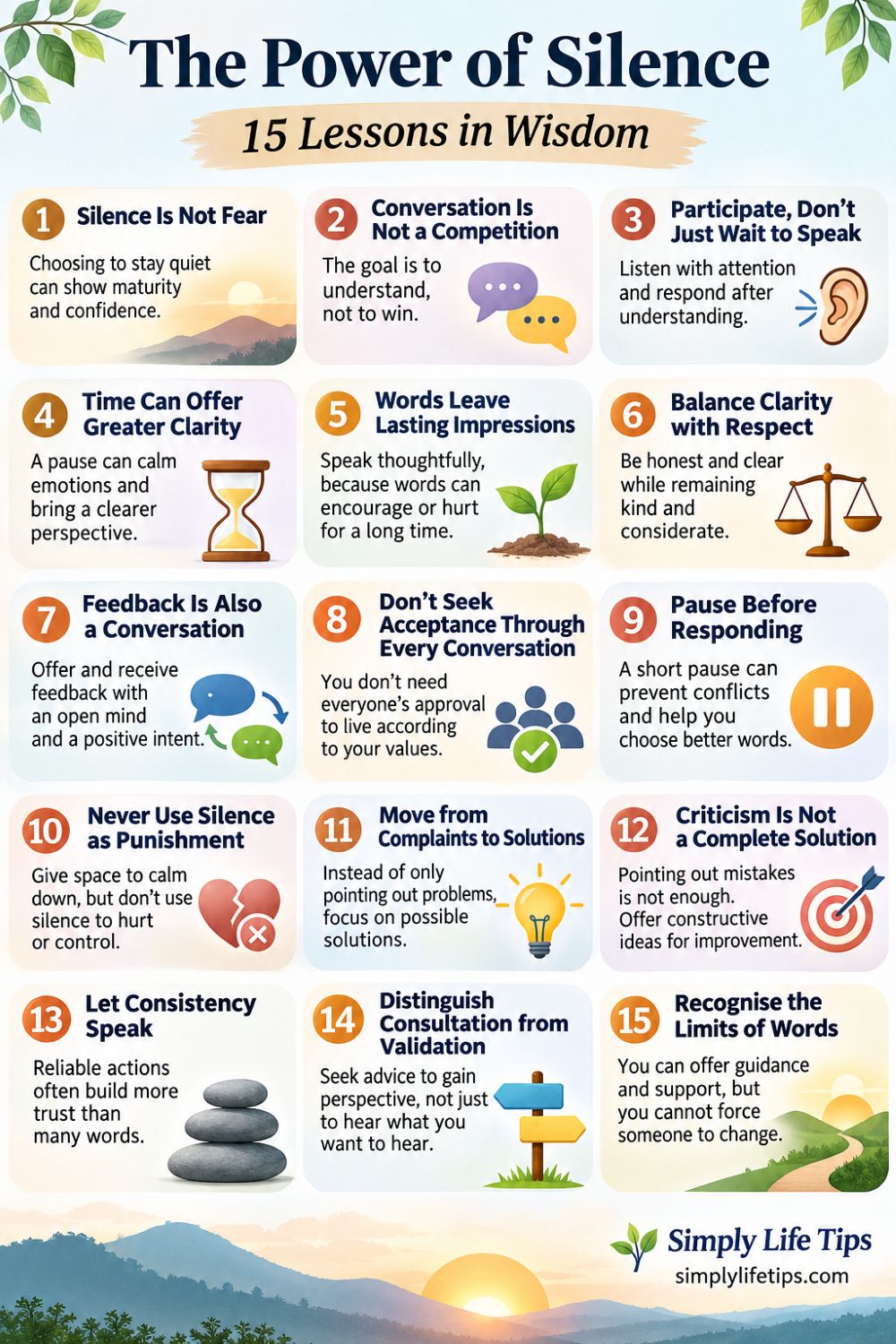
Here are 15 reflections on the wisdom of silence and the importance of thoughtful communication.
What Is the Power of Silence?
The power of silence is the ability to recognise when speaking may not help a conversation. It involves listening attentively, allowing others to express their thoughts, pausing before responding and choosing words carefully.
In communication, silence is not simply the absence of speech. It can show respect, patience and self-control. It gives people an opportunity to understand what is being said before deciding how to respond.
The power of silence becomes especially valuable when emotions influence our judgement and a thoughtful response can prevent unnecessary conflict.
Consider a situation where two people begin arguing over a minor disagreement. As the conversation continues, their voices become louder, accusations increase, and hurtful words are exchanged. What starts as a simple difference of opinion may eventually damage their relationship.
A thoughtful pause could have prevented the situation from escalating.
However, silence does not mean avoiding every difficult conversation. It means understanding when to speak, what to say and how to express ourselves constructively.
15 Lessons on the Power of Silence
1. Silence Is Not Fear
Choosing not to speak does not indicate weakness. It may reflect maturity, mindfulness and emotional intelligence.
You do not have to respond to every criticism, provocation or disagreement. Sometimes, remaining silent demonstrates greater confidence than reacting impulsively.
For example, when someone makes an unfair comment about you, responding angrily may create a bigger problem. Taking time to understand the situation can help you decide whether a response is necessary.
Silence can also give you the emotional space to recognise what truly matters instead of wasting energy on unnecessary arguments.
True confidence includes knowing when to speak and when to remain silent.
2. Conversation Is Not a Competition
The purpose of conversation is to understand, not to defeat. Winning an argument does not necessarily mean winning understanding.
Some people approach every disagreement as a competition. They interrupt, reject opposing opinions and concentrate on proving themselves right.
However, meaningful communication is not about establishing superiority. It is about exchanging ideas, understanding different perspectives and finding common ground.
For example, during a family discussion, listening patiently to another person’s opinion can help resolve disagreements more effectively than repeatedly defending your own position.
Instead of asking, “How can I win this argument?”, ask, “What can I learn from this conversation?”
A conversation becomes valuable when everyone feels respected and heard.
3. Participate, Don’t Just Wait to Speak
Many people listen merely to find their opportunity to respond. Meaningful participation begins with genuine listening.
While someone is speaking, we sometimes prepare our answers instead of concentrating on what they are saying. As a result, we may miss important details, emotions and concerns.
Good communication requires attention, empathy and respect.
For example, when a friend shares a personal problem, immediately offering advice may not be helpful. Sometimes, the person simply needs someone who will listen without interrupting or judging.
Allow others to finish their thoughts. Ask relevant questions and respond after understanding their concerns.
Active listening strengthens relationships because people feel valued when their opinions and experiences receive genuine attention.

Read more: Benefits of Active Listening.
4. Time Can Offer Greater Clarity
Sometimes, time resolves what lengthy discussions and repeated explanations cannot.
When emotions are intense, it becomes difficult to understand a situation objectively. Continuing an argument may increase frustration rather than produce a solution.
Taking a temporary break allows everyone involved to calm down, reconsider their words and reflect on what happened.
For example, if two colleagues disagree during a meeting, postponing the discussion until they can speak calmly may produce a better outcome.
However, taking time to reflect should not become an excuse to avoid responsibility. If an issue needs attention, return to the conversation when you are ready to discuss it constructively.
Silence creates an opportunity to reflect before reacting.
5. Words Leave Lasting Impressions
A harsh statement may take seconds to deliver but remain in someone’s heart for years.
Words have the power to encourage, comfort and inspire. Unfortunately, they can also damage confidence, create resentment and weaken relationships.
For example, repeatedly criticising a child’s abilities can affect their self-confidence. Correcting mistakes with patience and encouragement is more constructive than using humiliating language.
Before speaking, consider the possible impact of your words.
Ask yourself whether your statement will clarify the situation, encourage improvement or unnecessarily hurt someone.
Thoughtful communication means recognising that words carry responsibility.
Choosing words carefully is just as important as knowing when to speak. Explore Choice of Words in Effective Communication to learn how thoughtful word choices can make conversations clearer, more respectful and more meaningful.
6. Balance Clarity with Respect
Effective communication requires both clarity and respect. Clarity without respect can hurt; respect without clarity can confuse.
Being honest does not mean being unnecessarily harsh. Similarly, being polite does not require hiding important information.
For example, when a colleague makes a mistake, explain what needs improvement without attacking their personality.
Instead of saying, “You never do anything properly,” try saying, “This part needs some improvement. Let’s discuss how we can correct it.”
The message remains clear, but the approach becomes more constructive.
Honesty, kindness and consideration should work together in meaningful communication.
Read more: Speaking With Candour.
7. Feedback Is Also a Conversation
Feedback should encourage reflection and improvement, not establish superiority.
Some people use criticism to demonstrate their knowledge or authority. However, pointing out mistakes without offering constructive guidance rarely helps others improve.
Good feedback identifies the problem, explains its impact and suggests possible improvements.
For example, instead of telling someone that their presentation was poor, explain which sections were unclear and how they could organise their ideas more effectively.
Receiving feedback also requires an open mind. Listen carefully, consider whether the observation is valid and avoid becoming unnecessarily defensive.
A healthy exchange of feedback involves speaking, listening, questioning and learning.
8. Don’t Seek Acceptance Through Every Conversation
Someone else’s perception of you is neither your identity nor the final verdict on your worth.
Constantly trying to gain approval can become emotionally exhausting. You may find yourself repeatedly explaining your decisions, defending your opinions and changing your behaviour to satisfy others.
For example, someone may misunderstand your intentions despite your sincere explanation. Repeatedly defending yourself may not change their opinion.
Clarify important misunderstandings when necessary, but recognise that you cannot control everyone’s perception of you.
Respectful communication is important, but so is maintaining self-respect.
You do not need universal approval to live according to your values.
9. Pause Before Responding
A thoughtful pause can prevent unnecessary conflicts and misunderstandings.
When emotions rise, we may respond impulsively without considering the consequences. Taking a moment to breathe and organise our thoughts can help us choose better words.
Before responding, ask yourself:
- Will my words clarify the situation or complicate it?
- Am I seeking understanding or defending my ego?
- Is this the right time to speak?
- Will my response help resolve the problem?
For example, receiving an angry message may tempt you to reply immediately. Waiting until you feel calmer can prevent an unnecessary exchange of hurtful words.
A pause is not an escape from communication. It is an opportunity to communicate more wisely.
Read more: Think Before You Speak.
10. Never Use Silence as Punishment
Silence should not become emotional manipulation.
There is an important difference between taking time to calm down and deliberately refusing to communicate to punish or control another person.
Constructive silence gives people space to reflect. The silent treatment, however, can create anxiety, confusion and emotional distance.
For example, after an argument, saying, “I am upset and need some time. Let’s discuss this when we are both calmer,” communicates your need for space respectfully.
Ignoring someone indefinitely without explanation can damage trust and make resolving the disagreement more difficult.
Healthy relationships require communication, accountability and mutual respect.
Use silence to create space for understanding, never as a weapon to hurt someone.
11. Move from Complaints to Solutions
Before expressing dissatisfaction, consider what constructive action might improve the situation.
Complaining about problems without considering possible solutions rarely produces meaningful change.
For example, instead of repeatedly complaining about poor teamwork, discuss responsibilities, expectations and practical ways to improve cooperation.
This does not mean suppressing legitimate concerns. Problems should be addressed honestly, but the discussion should also encourage improvement.
Before complaining, ask yourself:
- What exactly is the problem?
- What can I do to improve the situation?
- What constructive suggestion can I offer?
Thoughtful communication focuses not only on identifying problems but also on finding solutions.
12. Criticism Is Not a Complete Solution
Criticism may identify a problem, but constructive thinking creates possibilities.
Pointing out weaknesses without offering guidance can discourage people and damage relationships.
For example, telling someone that their work is unsatisfactory does not explain how they can improve. Specific suggestions and respectful feedback are more useful.
This does not mean every criticism needs an immediate solution. Recognising a genuine problem is often the first step towards improvement.
However, criticism becomes more valuable when it encourages reflection, learning and positive action.
Instead of concentrating only on what went wrong, consider what can be done better.
Constructive criticism should describe the behaviour or work that needs improvement rather than attack the person’s character.
13. Let Consistency Speak
Hard work does not always require advertisement. Consistent actions often communicate more powerfully than declarations.
People build trust through reliability, honesty and responsible behaviour.
For example, someone who regularly fulfils commitments, treats others respectfully and performs their responsibilities does not need to repeatedly announce their good intentions.
Their actions gradually establish their credibility.
This does not mean hiding your achievements or refusing to communicate your contributions. It means allowing your actions to support your words.
Consistency builds trust, and trust is stronger than empty promises.
14. Distinguish Consultation from Validation
Consultation seeks perspectives and learning. Validation merely seeks approval for an existing belief.
When making an important decision, seeking advice from experienced people can help us understand different possibilities and consequences.
However, sometimes we ask others for opinions only because we want them to agree with a decision we have already made.
For example, when considering a career change, consulting people with relevant experience may reveal opportunities and risks you had not considered.
Be willing to listen to opinions that challenge your assumptions.
Wisdom involves learning from others, examining different perspectives and making responsible decisions.
15. Recognise the Limits of Words
You can show someone the path, but you cannot walk it for them. Sometimes, wisdom lies in knowing when to stop explaining.
Words can offer guidance, encouragement and support, but they cannot force someone to accept advice or change their behaviour.
For example, you may repeatedly encourage a friend to develop healthier habits. You can share information and offer support, but the final decision belongs to that person.
Similarly, explaining your position repeatedly does not guarantee that someone will understand or agree with you.
Recognise when further explanation is unlikely to help. Respect individual choices and allow others to take responsibility for their actions.
Sometimes, the wisest response is to stop explaining and let your actions speak.
How Silence Strengthens Relationships
Silence can strengthen relationships when it allows people to listen, understand and respond with consideration. Instead of interrupting or immediately defending ourselves, we can allow others to express their feelings and explain their concerns.
For example, when a family member is upset, listening patiently before offering advice can help that person feel respected and understood. At work, allowing a colleague to finish an explanation can prevent unnecessary misunderstandings.
Research on interpersonal listening identifies attention, empathy and respect as important components of feeling heard. These qualities make attentive listening a meaningful part of communication. Read the research: Feeling Heard: Operationalizing a Key Concept for Social Relations
However, silence alone does not guarantee healthy relationships. It must be balanced with honest expression, appropriate feedback and a willingness to address difficult issues.
When Silence Is Not the Right Response
Although silence can be valuable, remaining quiet is not always the wisest choice.
There are situations where speaking up is necessary.
When Someone Needs Your Support
If someone is experiencing grief, distress or difficulty, complete silence may make them feel ignored. A few compassionate words can provide reassurance and comfort.
When Injustice Occurs
Remaining silent when someone is being mistreated can allow harmful behaviour to continue. Speaking up respectfully and taking appropriate action may be necessary.
When Accountability Is Required
If you have made a mistake, silence should not become a way to avoid responsibility. A sincere apology and honest explanation can help rebuild trust.
When Important Issues Need Discussion
Avoiding difficult conversations may create resentment and misunderstanding. Healthy relationships require people to discuss concerns openly and respectfully.
The Art of Listening
Good listeners do not simply wait for their turn to speak. They pay attention to the speaker’s words, notice the concerns being expressed and respond in a way that shows understanding.
You can improve your listening skills by:
- Avoiding interruptions.
- Paying attention to the speaker’s words and feelings.
- Asking relevant questions.
- Avoiding premature judgments.
- Responding thoughtfully.
- Respecting different opinions.
When people feel genuinely heard, they are more likely to develop trust and communicate openly.
Listening is not a passive activity. It is an essential part of meaningful communication.
Read more: Listening Is the Best Sincere Form of Respect.
Conclusion
The power of silence is not about avoiding conversations or remaining quiet in every situation; it is about recognising when speaking is helpful and when listening or remaining silent is wiser.
In everyday communication, a thoughtful pause can prevent unnecessary conflict, attentive listening can strengthen relationships, and carefully chosen words can make difficult conversations more constructive.
Speak when your words can bring clarity. Listen when someone needs to be understood. Remain silent when responding would only create unnecessary conflict.
True wisdom is not measured by how much we speak, but by how thoughtfully we communicate.
Frequently Asked Questions About The Power of Silence
1. What is the power of silence?
The power of silence is the ability to recognise when remaining quiet is more beneficial than speaking. It helps people manage emotions, listen carefully, avoid unnecessary arguments and make thoughtful decisions.
2. Why is silence important in communication?
Silence gives people time to listen, reflect and understand different perspectives. It can prevent impulsive reactions, reduce misunderstandings and make conversations more meaningful.
3. Is silence a sign of weakness?
No. Choosing silence in appropriate situations can demonstrate confidence, patience and emotional maturity. However, remaining silent out of fear or avoiding necessary conversations may not be helpful.
4. What is the difference between healthy silence and the silent treatment?
Healthy silence is a temporary and respectful pause used to manage emotions or think clearly. The silent treatment deliberately withholds communication to punish, control or manipulate another person.
5. How can I practise the power of silence in everyday life?
Start by listening without interrupting, pausing before responding, avoiding unnecessary arguments and thinking about the impact of your words. Also, learn when speaking up is necessary to express concerns, protect relationships and address injustice.
References
- Roos, C. A., Postmes, T., and Koudenburg, N. (2023). Feeling heard: Operationalizing a key concept for social relations. PLOS ONE.
- Healthy Relationships Initiative. Managing Conflict in Close Relationships. Guidance on constructive time-outs, stonewalling and the silent treatment.

Mathukutty P. V. is the founder of Simply Life Tips. He shares practical advice and useful insights on personal growth, health, well-being, technology, and everyday living. His goal is to help readers build positive habits and make informed decisions. He believes in continuous learning and sharing knowledge to help people live healthier, happier, and more meaningful lives.